
EV vs. Diesel vs. CNG: The True Cost of Ownership Explained
EV vs. Diesel vs. CNG: The True Cost of Ownership Explained
Introduction
In the transport business, your vehicle isn’t just a machine—it’s your business partner. For decades, the Indian 3-wheeler market was dominated by Diesel and later CNG. But in 2026, the math has changed. If you are still driving a combustion engine auto, you might be burning your daily profits in fuel. At GEV, we believe in “Zero Pollution, Maximum Savings.” Let’s look at the numbers to see how switching to electric puts more money in your pocket.
1.Daily Running Costs
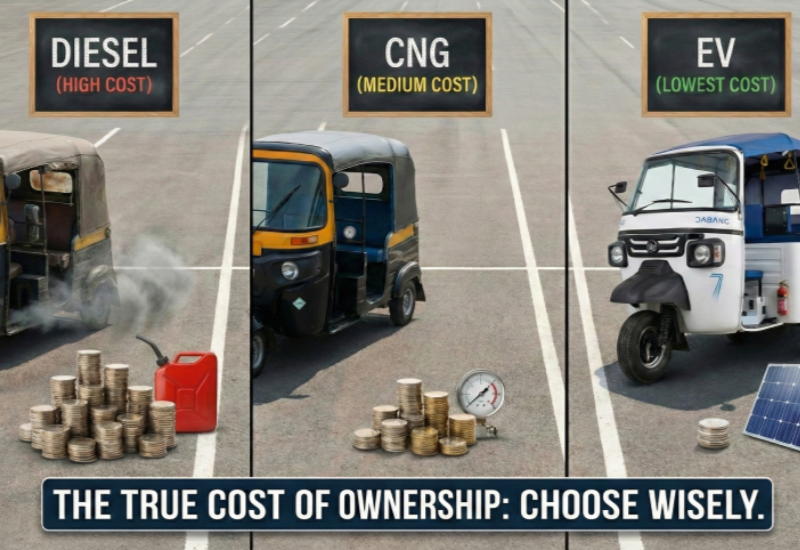
The ₹/km Battle The biggest expense for any driver is fuel. Here is the breakdown based on current 2026 market rates:
| Feature | Diesel Auto | CNG Auto | GEV Electric Auto |
|---|---|---|---|
| Fuel Cost (Approx) | ₹90 - ₹95 / Litre | ₹75 - ₹80 / Kg | ₹7 - ₹9 / Unit |
| Mileage / Range | 20 - 25 km/L | 25 - 30 km/Kg | 100 - 120 km / Charge |
| Cost Per KM | ₹4.00 - ₹4.50 | ₹2.60 - ₹3.00 | ₹0.50 - ₹0.80 |
The GEV Advantage: Driving 100 km a day?
Diesel Cost: ₹450/day
GEV Cost: ₹60/day
Daily Savings: ₹390 (That’s ₹11,700 per month saved just on fuel!)
2. Maintenance
Stop Visiting the Mechanic Diesel engines vibrate. They have pistons, rings, valves, and clutches that wear out.
Diesel/CNG: Requires engine oil changes, filter replacements, and clutch work every 2-3 months. Annual cost: ₹15,000+.
GEV: No engine, no gearbox, no oil. Just checking brake pads and tyres. Annual cost: ₹2,000 – ₹3,000.
3. The EMI
“Magic Trick” Many buyers worry that EVs are slightly more expensive upfront. But look at the cash flow: If your EV EMI is ₹2,000 higher than a Diesel auto, but you save ₹11,000 on fuel every month, the vehicle effectively pays for its own EMI.
Conclusion
Don’t just look at the showroom price; look at the bank balance at the end of the month. A GEV isn’t an expense; it’s an investment that starts paying you back from Day 1.