
What Decides the Real Cost of an Electric Auto in India?
What Decides the Real Cost of an Electric Auto in India?
Introduction
Rising petrol, diesel, and CNG rates make it harder every month for drivers and small businesses to take home decent money. Because of this, more operators are looking into the electric auto price to figure out whether switching to battery power makes good business sense.
The short answer is yes—battery power cuts your daily running expenses immediately. However, vehicles come in many shapes and sizes, which means costs vary depending on what work you need the vehicle to handle.
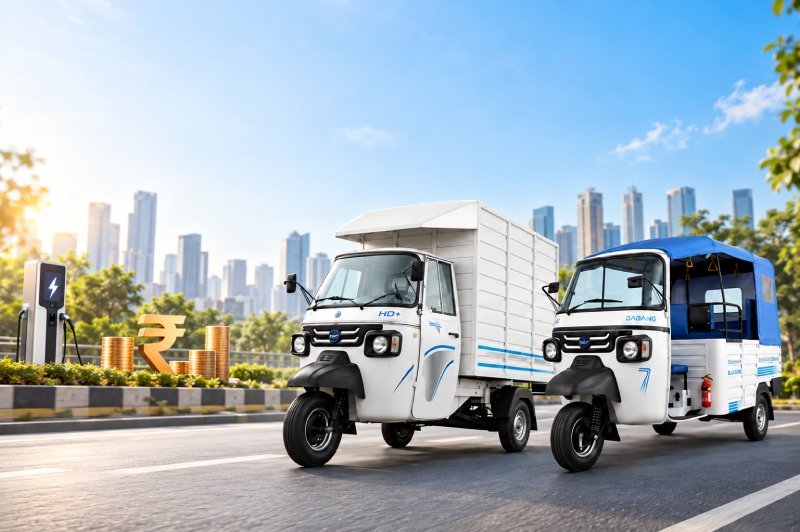
Here is a straightforward look at what you are paying for, how the numbers work, and how GEV (Gayatri Electric Vehicles) designs vehicles to put more cash in your pocket every day.
What Goes Into the Price of a Battery Auto?
When you check the electric auto price across dealerships, you will notice that two models sitting right next to each other can have very different price tags. That difference comes down to three basic things:
- The Battery Type
- Lead-Acid Batteries: These keep your upfront purchase cost as low as possible. They are dependable for regular daily runs and typically take around 8 hours to reach a full charge.
- Lithium-Ion Batteries: These cost more at the showroom, but they charge in about 4 to 5 hours and last several years longer before needing a replacement. For drivers covering long shifts, they save money over time.
- Carrying Capacity and Build Strength A vehicle built to carry heavy cargo boxes needs a thicker chassis, heavy-duty suspension, and a stronger motor than a small neighborhood runabout. More strength means a slightly higher sticker price.
- Government Subsidies The sticker price at the showroom is rarely the amount you end up paying. Central and state EV incentives reduce your final on-road cost, and many states waive road tax completely on electric three-wheelers.
The "Bada Munafa" Calculation: Cut Your Monthly Fuel Bills
Understanding the electric auto price helps you see that buying an EV is not just an expense—it is a way to stop spending your earnings at the fuel pump.
Cost Factor | Traditional CNG Auto | GEV Electric Auto |
Monthly Fuel / Charging | ~₹3,750 | ~₹420 |
Engine Oil & Filter Changes | Required regularly | None |
Moving Engine Parts to Service | Many | Very few |
Monthly Running Savings | Baseline | ₹3,000+ saved every month |
Because an electric auto has no engine, spark plugs, or engine oil, your maintenance visits drop sharply. You plug it into a standard 15A wall socket overnight, and you are ready to earn the next morning.
Bring Home Your New Earning Partner
Upgrading your vehicle does not require paying the full amount in cash upfront. GEV works alongside trusted vehicle finance companies to provide simple loan options, low down payments, and manageable monthly EMIs.
Visit a GEV dealership to see the vehicles in person, take a test drive, and find the right match for your daily routes.
FAQ
Q1: Can I charge a GEV electric auto using a regular home socket?
A: Yes. GEV vehicles are designed to charge from a standard 15-amp power socket at home or at your business location.
Q2: What makes the Dabang MaxX different from ordinary e-rickshaws?
A: The Dabang MaxX is an approved 8-seater vehicle (7 passengers + 1 driver) offering over 150 km of range per charge, allowing drivers to collect more fares per trip.
Q3: How much cargo can the Entrega HD+ handle?
A: The Entrega HD+ is built for commercial goods transport and is rated to carry up to 700 kg of cargo safely.
Q4: Are vehicle loans available for GEV electric three-wheelers?
A: Yes. GEV partners with finance providers to offer low down payments and flexible monthly EMI plans tailored to commercial operators.