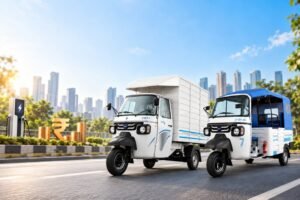
Complete Guide to the Government EV Subsidy in India (2026 Update): PM E-DRIVE Scheme Explained
Complete Guide to the PM E-DRIVE EV Subsidy for E-Rickshaws, E-Autos, and Loaders (2026 Update)
Introduction
Discover the latest 2026 PM E-DRIVE subsidy details for electric 3-wheelers in India. Learn how to claim direct discounts on commercial e-rickshaws, autos, and cargo loaders.
The shift toward sustainable last-mile transport in India has never been more profitable for commercial operators. With the introduction of the central government’s PM E-DRIVE (PM Electric Drive Revolution in Innovative Vehicle Enhancement) scheme, heavy financial backing is now available to upgrade aging, polluting fleets to modern electric platforms.
For commercial drivers, logistics businesses, and fleet operators relying on 3-wheeler passenger electric rickshaws, autos, and cargo loaders, navigating the latest 2026 subsidy policies is crucial. If you are looking to invest in Gayatri Electric Vehicles (GEV), here is exactly how the current central and state subsidies impact your bottom line.
PM E-DRIVE 2026: What 3-Wheeler Buyers Need to Know
Replacing the older FAME-II framework, the PM E-DRIVE scheme brings a massive ₹10,900 crore budget specifically targeted at commercial and public transport. Instead of focusing on personal luxury cars, the government is aggressively funding the vehicles that form the backbone of Indian logistics: electric three-wheelers (e-3W).
The central government categorizes commercial 3-wheelers into two main groups, each with its own subsidy status for 2026:
E-Rickshaws & E-Carts: Lightweight passenger and cargo vehicles.
L5 Category (E-Autos & Heavy Loaders): High-speed, heavy-duty passenger autos and loaders.
2026 Subsidy Breakdown: E-Rickshaws, Autos, and Loaders
Depending on the specific GEV model you are purchasing for your passenger or logistics operations, the PM E-DRIVE framework applies differently.
1. E-Rickshaws and E-Carts (Active Subsidy)
For lightweight passenger e-rickshaws and commercial e-carts, the central government has actively extended the demand incentive until March 31, 2028.
Subsidy Rate: You receive a direct upfront discount of ₹2,500 per kWh of battery capacity.
Maximum Cap: The central subsidy is strictly capped at ₹12,500 per vehicle.
Price Ceiling: To qualify for this discount, the ex-factory price of the e-rickshaw must remain under ₹2.5 Lakh.
2. L5 Category: E-Autos and Heavy Loaders (Target Reached)
Because the adoption rate of heavy L5 cargo loaders and high-speed passenger e-autos was so aggressive, the specific central PM E-DRIVE budget allocated for this segment hit its 100% volume target cap. As a result, central demand incentives for the L5 category officially closed on December 26, 2025.
However, buyers of heavy-duty L5 loaders and autos still benefit tremendously from lower GST (a flat 5% compared to 28% for internal combustion vehicles) and powerful state-level exemptions.
How to Claim Your Subsidy: The Seamless E-Voucher System
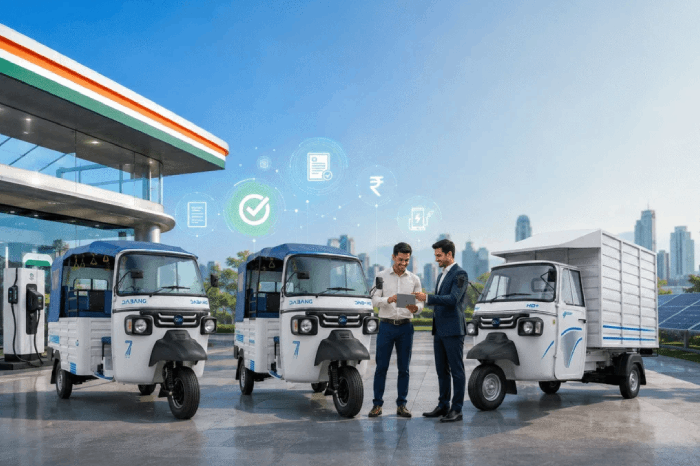
Gone are the days of filing post-purchase reimbursement claims. The PM E-DRIVE scheme utilizes a fully digital Aadhaar-authenticated e-Voucher system integrated directly at the dealership level.
Here is how it works when you purchase your GEV 3-wheeler:
Select an Approved Model: Choose an eligible e-rickshaw or e-cart at the showroom.
Instant KYC: The dealer will perform a quick biometric or OTP-based Aadhaar e-KYC right at the billing counter.
Voucher Generation: A digital e-Voucher is generated instantly on the government portal.
Upfront Discount: The dealer deducts the total subsidy amount (up to ₹12,500) directly from your final purchase invoice. You only pay the balance.
Beyond Central Subsidies: State Benefits and Financing
The PM E-DRIVE discount is just the foundation. Almost all Indian states heavily incentivize commercial electric 3-wheelers through their localized EV policies. When registering your vehicle, you can typically expect a 100% waiver on road tax and registration fees, dramatically reducing the on-road price.
To make the transition even smoother, specialized lending rates are available for commercial EV buyers. Whether you are an independent driver buying your first e-rickshaw or a logistics manager acquiring a fleet of loaders, configuring the right loan is essential. Explore EMI options and tailored loan structures on our Vehicle Finance page.
Maximizing Your Fleet ROI with Gayatri Electric Vehicles
Upgrading to an electric 3-wheeler is purely a mathematical advantage for commercial operators. An electric powertrain slashes your running cost-per-kilometer to a fraction of what diesel or CNG demands. When you combine the central e-Voucher discount, state road tax waivers, and daily operational savings, the break-even point for a commercial EV is incredibly short.
For fleet owners and business operators looking to scale their logistics or passenger operations, the transition to electric mobility represents a highly lucrative venture. Discover how to leverage commercial EV fleets for maximum profitability by visiting our Electric Vehicle Investment guide.
To stay updated on new model launches, battery technology advancements, and shifting commercial EV regulations, read more on the Gevworld Blog.